en
 de
 jp
 kor
 fra
 spa
 ru
 pt
 it


Corrosion Resistant Alloy: Everything You Need to Know
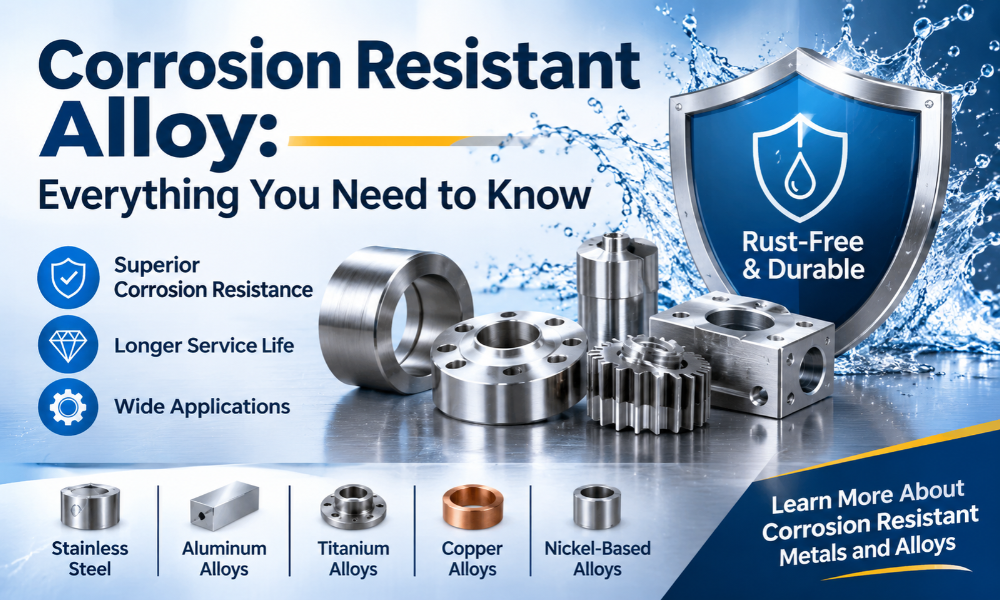 Corrosion is one of the most prevalent issues encountered with metal products and industrial components. Exposure to different environments (i.e. elements, moisture, salts, chemicals, etc.) can lead to deterioration of the metals, thereby decreasing the strength and reliability of the product. To overcome this issue, manufacturers incorporate corrosion resistant alloys into their components. Examples of applications of these materials can thus be found in various industries from manufacture of automotive parts and auxiliary systems to medical instruments and equipment. In this article we will review some of the types of alloys, the mechanisms underlying corrosion resistance of such materials as well as some of the factors influencing selection of such materials.
What Is a Corrosion Resistant Alloy?
Explain to the reader what a corrosion resistant alloy is in comparison to ordinary metals. Explain how incorporating elements (e.g. chromium, nickel, molybdenum and/or aluminum) in a metal increases its resistance to corrosion (i.e. increases its ability to withstand exposure to various chemicals/oxidizers and moisture). Additionally, discuss how various metals, when in contact with specific metals or metal ions, can develop thin oxide layers that further slow the rate of corrosion of the metal surface. Also, explain to the reader the difference between corrosion resistant, rust resistant and corrosion proof metals, and that there are no metals that are completely immune to corrosion in all environments. To improve the reader’s understanding of this concept, include the related terms corrosion resistant materials/alloys/metals and/or the general concept of the degree of corrosion resistance of a particular material.
How Does Corrosion Resistance Work in Metal Alloys?
Explain metal corrosion to the reader including the issues associated with exposure of metals to water and salts as well as various chemicals. Describe for the reader how corrosion in metal alloys can be controlled/slower by the inclusion of specific alloying elements (i.e. nickel and molybdenum in addition to chromium, which is already included in stainless steels, to further improve resistance to corrosion in more severe environments).
How long a given corrosion resistant material will last is dependent upon several variables including the metal’s composition, the condition of the metal’s surface, as well as the level of exposure to the corrosive environment.
Common Factors That Affect Corrosion Resistance
I will now review the main factors that affect resistance to corrosion to determine what environmental and/or operating conditions may adversely affect metal surfaces. E.g. the presence of moisture and/or humidity in the air will encourage the process of oxidation of the metal surface. Salt water (i.e. marine environment) often increases corrosion of metallic surfaces. Other environmental conditions (i.e. acids, industrial chemicals, high and varying temperatures, etc.) also adversely affect integrity of the metal surface and may expose the metal to further corrosion. Defects such as scratches and/or surface damage, along with poor maintenance of the facility/structure, also increase the likelihood of corrosion.
Types of Corrosion Resistant Alloys
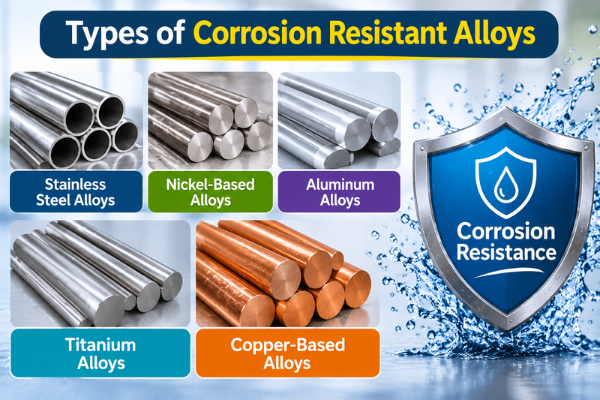
Many different alloys are available for use in various industrial applications. Each of these alloys vary in their levels of protection to adverse environmental conditions as well as in their cost, mechanical strength and weight. Some of these include stainless steels, nickel based alloys, aluminum alloys, titanium alloys and copper based alloys.
Stainless Steel Alloys
Some of the higher levels of corrosion resistance in metals (i.e. those used in the production of various types of industrial, medical and construction equipment etc.) can be achieved by the use of certain stainless steel alloys e.g. 304 and/or 316, with 316L being the lowest of the corrosion resistant steel grades. Metals in general are more susceptible to corrosion in seawater (i.e. salt water).
Nickel-Based Alloys
Discuss Nickel based alloys such as Inconel and Hastelloy to describe environments that are harsh (i.e. highly corrosive, high temperatures, etc.) where these alloys offer excellent wear resistance and performance. Also, discuss applications where benefits of using these alloys outweigh the cost of using more economical alternative materials (e.g. in equipment and machinery used in chemical and marine industries).
Aluminum Alloys
Discuss formation of extremely thin, naturally occurring oxide layers on aluminum alloys which provide corrosion resistant properties. Describe characteristics of aluminum alloys best suited to resist different kinds of environments most relevant to the engineering/machining industry.
Titanium Alloys
Discuss titanium alloys as very corrosion resistant in numerous applications. Simply state how the formation of a stable oxide film on titanium enables its protection against seawater (moisture) and various chemicals. Also include discussion on the potential advantages offered by using titanium (e.g. high strength to weight ratio, etc.) to justify its use in various applications in the aerospace industry, medical implants and in marine applications (e.g. pumps, piping and associated hardware in liquid process or condensate systems).
Copper-Based Alloys
Discuss other copper based alloys (such as brass and bronze) and their resistance to various environments. State where and how they are used e.g. in plumbing systems, certain types of electric appliances, marine fittings, and accessories and other general industrial applications.
What Metals Don't Rust or Corrode?
Most people attempting to answer these questions are really interested in general corrosion of metals, of which the rusting of iron and steel is the most recognizable example. Other similar forms of corrosion do not involve an iron/steel substrate, hence would not be appropriately described as ‘rusting’. In general, metals and/or their alloys which are least susceptible to rusting, i.e. corrosion, are aluminum, titanium, nickel, copper and other less common metals. In various environments including fresh, salt and industrial water, these metals/alloys may also exhibit other races of corrosion.
In some cases, however, metals that are considered to be most resistant to rust/corrosion may also deteriorate over long periods of time in service. Therefore, it may not be prudent to describe metals/alloys as ‘rust decor’ or ‘corrosion proof’ in an absolute sense.
Corrosion Resistant Metals List: Which Materials are the Best?
Provide our users a list of corrosion resistant metals in a format that empowers engineers, manufacturers and designers to compare the corrosion resistant properties of various materials in their field of expertise. Discuss aluminum, titanium, nickel based alloys and copper alloys as well as various grades of stainless steel. Depending on the alloying elements present, each of the above materials may be suitable or unsuitable for use in specific applications (i.e. with/without exposure to salt and/or water, or in a given chemical processing stream, etc.). To help the reader, we’ve included a summary comparison chart.
What Is the Most Corrosion Resistant Stainless Steel?
Discuss 304, 316, and 316L grades of stainless steel to describe various levels of corrosion resistance of the alloys. In what types of environments do chromium, nickel and molybdenum affect the performance of the alloy?
In general, grade 316 and 316L stainless steels are more resistant to corrosion in environments containing chlorides compared to grade 304 stainless steel; however, in both cases the metals will ultimately still corrode.
Corrosion Resistant Alloy vs. Regular Steel: What Is the Difference?
Compare corrosion resistant steels to regular carbon steels to determine differences in their chemical compositions, expected lifetime, and/ore required maintenance. When exposed to moisture and air regular carbon steels easily rust, while corrosion resistant steels prevent the formation of rust through protective coatings and/or alloying elements in the steel. Provide examples of corrosion resistant steels employed in various construction, manufacturing and/or process industries.
Indicate in each of these examples where the use of more corrosion resistant steels in the manufacturing of the equipment would potentially reduce maintenance costs over the life of the equipment.
Common Applications of Corrosion Resistant Alloys
In several of the industries listed below we will consider the use of corrosion resistant metals and/or alloys to produce final products e.g. in the manufacturing of increasingly sophisticated machinery/equipment for the motor (automobile) and aerospace industries, medical/clinically related equipment and apparatus.
Automotive and Aerospace Manufacturing
Automotive and aerospace manufacturers use corrosion resistant materials in various engine components, fasteners and structural parts. Additionally, dentils, fittings, tools and other metal products are often incorporated in the assembly of vehicles and aircraft. Light weight corrosion resistant aluminum alloys are particularly useful to reduce the overall weight of the components being assembled.
Medical Equipment and Devices
Stainless steel and titanium are commonly employed in the manufacture of surgical instruments and various medical precision components and implants. When constructing equipment/devices that will come in contact with moisture during sterilization/equipment use we also consider the tendency of the equipment to corrode (i.e. corrosion resistance of the equipment) as well as the quality of the surface finish of the device.
Marine and Chemical Processing Industries
Nickel based alloys, stainless steels and titanium are typically used in marine applications and equipment to be exposed to chemical processing environments. Examples of such applications may include parts of pumps and valves as well as piping systems in the chemical processing industries.
Electronics and Industrial Machinery
Discuss where corrosion resistant metals can be found in electronic devices, connectors, housings, precision industrial machinery, and mechanical systems. Also, discuss the impact of exposure to moisture, other chemicals and/or environment factors on the reliability of the components. Lastly discuss examples of abrasion resistant metals which manufacturers may also require to use in addition to metals that show good corrosion resistance.
How to Choose the Right Corrosion Resistant Alloy
When selecting a corrosion resistant alloy there are several factors to consider related to the intended use of the product (e.g. exposure to moisture and/or salt water, what chemicals will it come in contact with, what is the operating temperature, how strong does the alloy need to be to withstand the forces it will be subjected to during use, how long is the expected life of the product?). Once these factors have been determined we recommend that an engineer subsequently evaluate factors such as the volume of components to be produced, the required surface finish, ease of machining (if required), and overall cost to select the best material for the application.
Other important factors to consider during this selection process are the shape and size of the component to be made as well as any complex features that may be present in the final design.
How Metal Injection Molding Supports Corrosion Resistant Metal Components
Explain what Metal Injection Molding (MIM) is and how it uses finely divided metal powder mixed with a binder to fabricate small, yet complex and/or thin metal components. Describe the main steps in the process (feedstock preparation, injection molding, debinding and sintering). Corrosion resistant metal components can be fabricated using this process with a variety of specialty steels. Discuss the various parameters (i.e. process control, surface finish) impacting the final performance of the component. Finally, give examples of the types of components (i.e. medical and automotive devices and components) that can be manufactured using MIM.
How to Maintain Corrosion Resistant Materials
Explain the necessity of maintaining even the most corrosion resistant metals to extend their lifetime. Dynamic environments may subject protective surface layers of metals and/or alloys to many potentially damaging agents including moisture and/or salts. Explain ways to reduce the risk of corrosion by reviewing basic maintenance practices of the metal including the use of appropriate cleaning agents, as well as actions the user can take to prevent exposure to corrosive agents.
Common Myths About Corrosion Resistant Alloys
In this section we will address some of the common myths associated with corrosion resistant alloys and materials. Often when people speak of ‘corrosion resistant’ materials they believe that they are entirely resistant to corrosion. This is not the case. Under certain circumstances, metals and/or materials which have been previously believed to be ‘corrosion resistant’ can potentially rust. Additionally, just because you purchase an expensive material, doesn’t mean that you are going to get the best answer for your application. Finally, different metals and/or materials have different corrosion limits. In this section we will also go through the various definitions/ranges of terms associated with ‘ corrosion resistant’ metals/materials to assist the reader in making the most appropriate/educated decision regarding the selection of materials for their application.
Precision Corrosion Resistant Metal Components
Explain the importance of selecting an experienced metal injection molding manufacturer when creating precision metal parts for more demanding applications. Further describe the contribution of various processes and expertise (i.e. material selection, product/process design, tooling, and manufacturing) in achieving the required quality and functional performance of the end product. Additionally, cover the integrated range of manufacturing services we offer, including metal injection, Harber MIM, surface coating, CNC machining and/or assembly and final testing/review of the finished product.
We encourage potential customers with an interest in developing precision metal components (i.e. corosion resistant stainless steel parts, etc.) to contact us today to discuss their requirements and/or proposals to better understand our capabilities.
FAQ:
What Is a Corrosion Resistant Alloy?
We will define the alloy and discuss how elements like chromium and nickel increase the corrosion resistance of the material.
What Metals Do Not Rust?
We will discuss aluminum, copper, titanium and stainless steel and explain/define why they are commonly thought to be resistant to corrosion (i.e., rust formation), and the types of corrosion that may still occur with these materials.
What Metal Will Not Rust in Water?
Identify and compare conditions of the water (fresh or salt water) and environment in which the material is being used, to determine the most appropriate corrosion resistant metal in the given situation.
What Is the Most Corrosion Resistant Metal?
Discuss some high performance metals/alloy systems including titanium and various nickel based alloys.
Is Stainless Steel Completely Corrosion-Proof?
Explain how stainless steel forms a protective chromium layer to inhibit corrosion, however, this layer can still be damaged in the presence of severe contamination.
What Is the Difference Between Corrosion Resistant Steel and Regular Steel?
Compare the two with respect to their composition, ease of rust formation, and other factors relevant to an industrial setting.
Are Corrosion Resistant Aluminum Alloys Suitable for Industrial Applications?
Evaluate the features of these alloys and compare with other materials used in the industry including the aerospace industry.
How Do I Choose the Right Corrosion Resistant Alloy?
A good starting point would be to evaluate the expected environment in which the alloy will be used, as well as the size and geometry of the component being manufactured and the mechanical loads expected to be placed on the component. Each of these factors will also impact the cost of the final product.
Conclusion
When designing components to be produced via manufacturing processes using metals and/or various metal alloys, engineers must take into consideration the environment in which the component will be used to determine the appropriate material to employ to best withstand that environment. Upon making an appropriate selection of a corrosion resistant alloy, additional benefits of increased reliability and/or decreased maintenance of the component may also be realized. Through appropriate integration of this management strategy with good design and manufacturing practices, instance may significantly benefit the achievement of performance goals for existing/manufacturing flow of products/processes.