en
 de
 jp
 kor
 fra
 spa
 ru
 pt
 it


Sheet Metal Fabrication: A Complete Engineering Guide
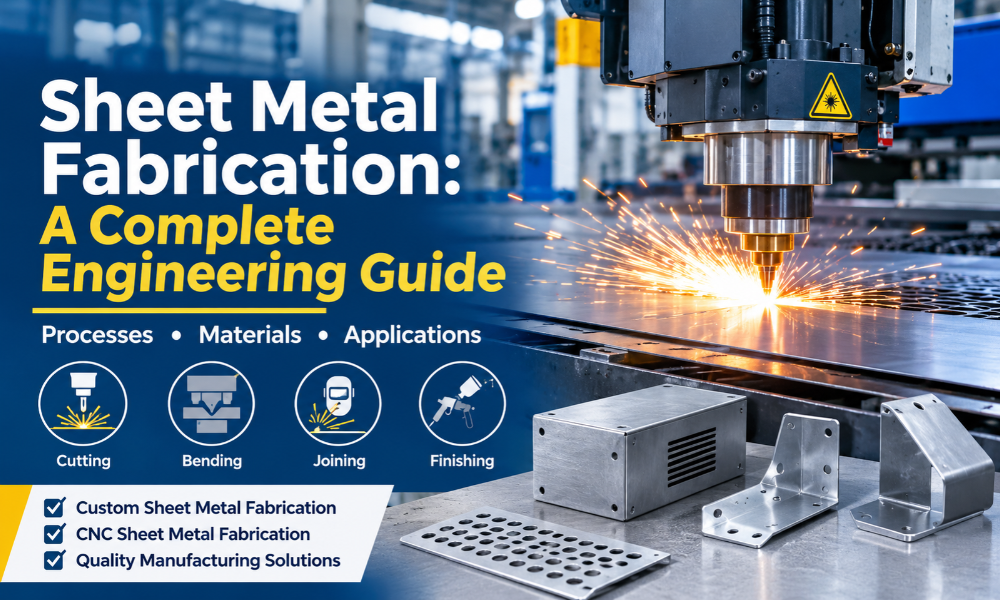
Sheet metal fabrication is the process of converting flat metal sheets into final components used in various engineering and industrial applications. In this section we will describe how various techniques such as cutting, bending, forming and joining of metal sheets enable us to fulfill the required specifications of the final product. We will also talk about recent advances in sheet metal fabrication, use of CNC machinery and other automation techniques in the metal fabrication industry.
What Is Sheet Metal Fabrication?
We will explain the steps involved in this type of manufacturing in which we typically start with flat sheets of metal of varying thickness and width (of different materials e.g. stainless steel, aluminum, carbon steel, copper and/or brass) and using various mechanical/automated machines convert these into final products. We will also differentiate between sheet metal fabrication and related processes such as metal machining and general metal manufacturing. We will include examples of each to help users of this technology to better understand the final components of various end products (i.e. in the automotive, construction and/or electronics industries, machinery, etc.).
How Does the Sheet Metal Fabrication Process Work?
This section will review the entire process starting from design and engineering to final inspection of the finished product. We will talk about how manufacturers use CAD drawings and 3D models along with specifications of the materials to be used in the production process. We will also review various methods of sheet metal cutting (i.e. laser, waterjet and/or plasma cutting and/or shearing) and explain when each may be used in the fabrication process. Lastly we will review the bending and forming of the sheet metal using press brakes as well as other CNC controlled equipment to accomplish the desired bend angles and radii, and then discuss methods of joining the sheet metal (i.e. riveting, welding, etc.) along with surface finishing processes (i.e. deburring, polishing, painting, powder coating, etc.) to achieve the final specification of the product.
Common Sheet Metal Fabrication Techniques
Different fabrication techniques are used to produce metal components of various shapes and sizes based on the end-use requirement of the component. We will discuss each of the following techniques: Laser Cutting, CNC Punching and Shearing. CNC Bending and Stamping will also be included along with Metal Joining process of welding. Lastly we will also discuss CNC Sheet Metal Fabrication and the overall advantages of integrating computer control in the various processes of sheet metal fabrication.
Types of Materials Used in Sheet Metal Fabrication
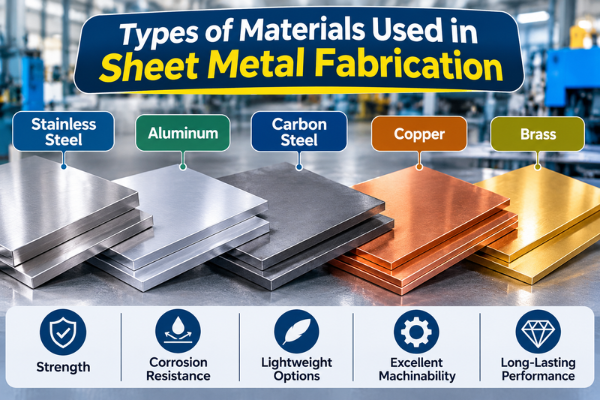
The main aspects which influence the choice of material to be used in sheet metal fabrication are the end use requirements such as strength, durability and corrosion resistance of the component as well as cost constraint. Some of the commonly used metals in sheet fabrication have been included in this section along with their typical industry usages, i.e. stainless steel for corrosion resistant equipment, aluminum for lightweight components, carbon steel for machinery and/or structural components, etc. We will also discuss some of the significant factors which should be taken into account while selecting the material (e.g. the thickness of the sheet to be used, environmental conditions, etc.).
Custom Sheet Metal Fabrication: Materials, Designs, and Applications
We can produce custom metal components based on your exact specifications, dimensions and requirements using a number of different materials and cutting methods. In this section we will cover each of these methods (i.e. custom cut aluminum and/or steel sheet, custom cut metal sheet, etc.). We will also review usage of pre cut sheet metal for instances where the user of the component wishes to minimize the processing time and/or cost to produce the component. Lastly we will cover some of the more complicated methods of sheet metal fabrication to include bends and cut outs of more complex shapes and will include a discussion on CNC bending of aluminum to achieve the desired shapes and results.
Applications of Sheet Metal Fabrication Across Industries
In this section we will look at various applications of sheet metal fabrication across different industries. For example in the automotive industry we will look at the fabrication of body panels and brackets, through to more complicated structural elements. In the electronics industry we will look at fabrication of enclosures and cabinets. In the construction industry we will look at some sheet metal components in roofing and in ductwork. Other industrial applications may include fabrication of covers and housings for various pieces of machinery.
We will also include examples of sheet metal fabrication used in the production of medical equipment and appliance housings.
The goal of this section will be to promote the use of sheet metal fabrication across a broad spectrum of industries.
Benefits of Modern Sheet Metal Manufacturing
When using recent technologies in sheet metal manufacturing, there are several advantages available to our customers. For example, the use of CNC equipment increases our dimensional accuracy and repeatability of the products we manufacture. In addition, production of the sheet metal components with optimal layout of cuts can increase material usage and reduce waste during the process. Overall, each of these trends help to reduce the cost of the manufactured components. Further benefits of using recent sheet metal manufacturing technologies include improved quality of the components manufactured (e.g. use of higher quality materials and/or surface treatments), increased durability of the components manufactured and better overall cost control of the manufacturing process.
How to Choose the Right Sheet Metal Fabrication Service
When choosing a sheet metal fabrication service there are a number of factors to consider in order to ensure you are partnering with the most appropriate supplier to achieve the quality and efficiency of your product. In this section we will discuss the various elements you should evaluate including their available processes (i.e. cutting, bending/forming, welding and/or finishing processes), the types of materials available and/or supported by them, engineering support including CAD services, dimensional tolerances, quality inspection procedures and processes, and their capacity and ability to deliver in the timeframe you need. Finally, you should evaluate their overall business experience and the extent to which they are able and willing to fulfill your customized requirements.
Online Sheet Metal Fabrication: How Digital Manufacturing Simplifies Ordering
This section will examine some of the online sheet metal fabrication services which allow customers to initiate a request for quotation to produce a custom sheet metal part by uploading their CAD drawings to the service, specifying the type of material to be used and other design requirements. We will also discuss online communications and order tracking associated with this type of digital manufacturing. Prior to placing the order, you should determine the supplier’s reliability as well as the quality of the sheet metal they commonly used in manufacturing.
Common Challenges in Sheet Metal Fabrication and How to Overcome Them
When using metal in a manufactured product there are a number of challenges that can impact the product’s quality and/or limit the rate of production. In this section we will discuss some of these challenges and how to overcome them using various techniques such as optimal layouts for cutting and/or nesting of sheet metal, as well as use of appropriate CAD and CNC equipment. We will also discuss optimal bend radius and color extension of the sheet metal to account for spring back as well as maintenance and inspection of the equipment used throughout the process.
The Future of the Sheet Metal Manufacturing Industry
We will review the latest advances in manufacturing technology to include use of automated laser cutting, CNC bending, and robotic systems to integrate both CAD and CAM in a virtual environment. We will also look at smart manufacturing in which real time quality and/or process variance monitoring will be integrated into the manufacturing system to optimize throughput and reduce waste. Finally, we will consider recent advances in the metal manufacturing industry and how these improvements are facilitating greater flexibility and automation in metal processing.
Partner with an Experienced Metal Manufacturing Company
To meet your business requirements for precision and production of metal components you should consider partnering with an experienced metal manufacturer. In this section we will cover the metal manufacturing capabilities (including MIM, precision tooling and CNC machining, material development and coating, as well as assembly) of Harber Industrial Limited to name just a few.
To get more information on how we can manufacture metal components to meet your specific requirements, Connect with Us Today.
FAQ:
Which Materials Are Commonly Used in Sheet Metal Fabrication?
Some of the more common materials used in sheet metal fabrication are stainless and/or carbon steels as well as aluminum/copper and brass.
What Is the Difference Between CNC and Traditional Sheet Metal Fabrication?
Compare and contrast the two methods with regard to automation, level of precision, overall processing time and/or level of repeatability.
How Does Laser Cutting Improve Sheet Metal Production?
Discuss with regards to the level of intricacy and speed of the process with respect to the overall production of the sheet metal components.
What Is Custom Sheet Metal Fabrication?
Explain how manufacturers create parts to the specifications of each individual customer drawing, dimension and/or engineering requirement.
How Do You Choose the Right Sheet Metal Thickness?
Consider the strength of the material as well as the limitations of the process required to form the components of the end product.
What Factors Affect the Cost of Sheet Metal Fabrication?
Consider the type and thickness of the material used, the complexity of the design of the part to be fabricated as well as the number of bending operations and/or additional processes to be carried out on the part to be fabricated.
Conclusion
Understanding CNC and manual milling processes helps manufacturers decide the most appropriate sheet metal fabrication method to use in their production process. In general, CNC milling is faster, more accurate and can be used to create more complex parts compared to manual milling. Of course there are situations where manual milling may be more appropriate. To summarise, the most appropriate milling method to use will depend on a number of factors including the budget available, the volume of parts to be produced and the level of accuracy required of the parts.